
Automate more with an improved API and agent-ready tools in Wagtail 8.1
See how Wagtail 8.1 can help you be ready for what's next

We are living through a big shift in how online content is created and consumed. Change is both exciting and scary. It's leading many people to ask, "What's happening to the Internet?"
Answering that question and then creating an online future that works for most people is going to take a lot more people and organizing and effort than a single open source project can provide. The way we're doing our part is by committing to make a CMS that gives users options instead of mandates.
Wagtail 8.1 continues to build on some of the key goals in our product strategy to equip our users for a future in which more people are using AI tools to automate tasks, build their own software, and interact with online content. Our last big release introduced a new version of the Wagtail REST API. This release includes an updated version of that API along with other features and tools to provide you with the flexibility you need to adapt to new advances and challenges of the Internet.
Write and fetch more content with the updated API
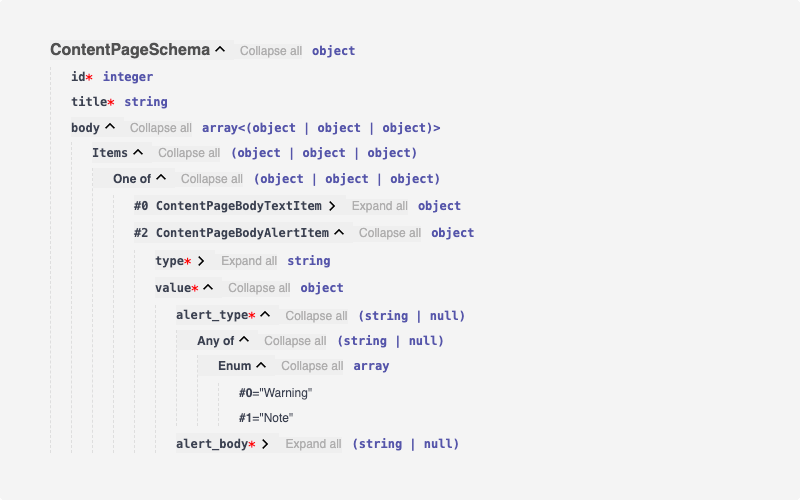
The newest version of the API includes more writeable content types, all typed according to the site’s data model. You can retrieve more detailed schemas for StreamField blocks and other data through the API now, which will help you access and edit more of your Wagtail content. Here is an example, inspecting what blocks are available on a content page and their exact fields:
We improved the Markdown output as well so that you can add more styled text for links, line breaks, multi-paragraph quotes, and nested lists. We also corrected the ways certain references are handled through the API and optimized the OpenAPI schema so it will work better for larger projects.
We're continuing to call this API a preview as we build and add more features. If there is anything you think we should prioritize, we definitely want to hear your feedback.
Access workflows through the API
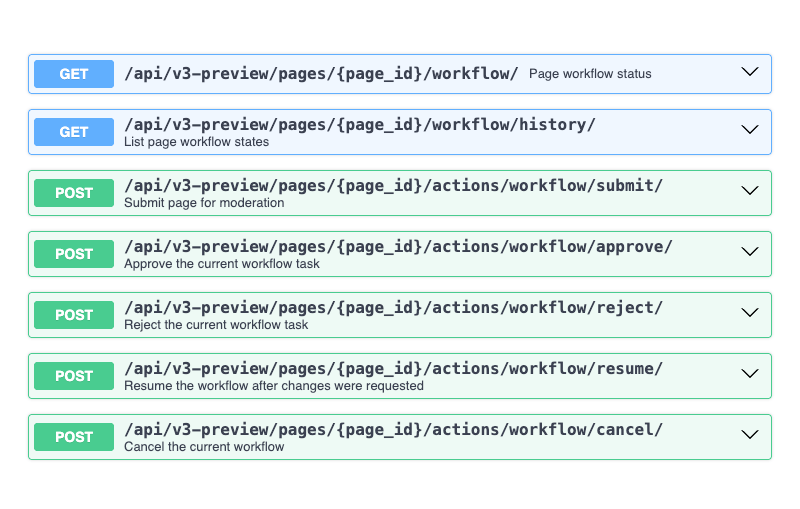
One of the bigger changes we've added to the API in this release is the ability to access Wagtail workflows through the API. Workflows are used to moderate and review content in Wagtail. Now you can submit pages or snippets for moderation, approve or reject moderation tasks, resume a workflow after changes were requested, cancel workflows, and read a workflow’s status and history through the API.
You can still do all these tasks through the Wagtail admin. But with the new API access, you have even more options to automate and track tasks related to your workflows. And like with all API features, this is all documented and typed to simplify integration into other systems:
Add more automation with official agent skills and the prototype CLI
When we surveyed our community about the sort of AI-related developer features you wanted to see for Wagtail, two popular requests were official skills for AI coding assistants and an official CLI for automating certain tasks. We have a new collection of official agent skills for developers to try out. We've also done some research on how different models perform with these skills and how energy efficient they are so you can make informed choices about which models you'd like to use for your projects.
The CLI we're offering right now is a prototype and may still have some rough edges. But if you're experimenting with AI automation, it's a good option for you to test out ways to connect AI agents to your Wagtail projects through the API. We haven't heard of anyone letting their OpenClaw agent run absolutely wild with their Wagtail content (yet), but this CLI gives you the option to do just that if you enjoy living dangerously. And if you’d to see what that looks like as a demo, here is an example of combining the API, CLI, and skills to do content operations with DeepSeek Harness and Mistral Large 4:
Enhance your SEO metadata with the new SEO checks
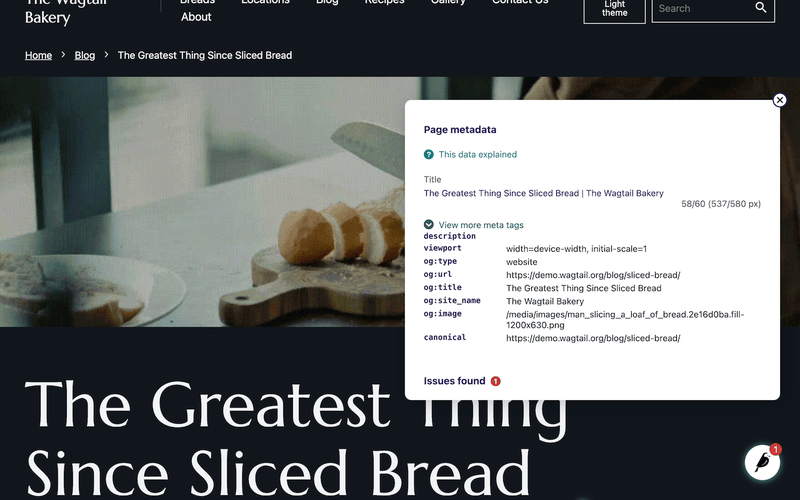
The checks section has a new feature to help you optimize your metadata and make it more SEO-friendly. The meta titles and descriptions will appear in the checks section along with a rating of the lengths for each of them. The ratings are informed by typical search engine display budgets and will help you make your meta data better for search engines and bots to collect. There is also an option for you to view and review other meta tags for your page directly in the Wagtail admin. And it’s also available on all live pages, within the userbar:
Thank you to Freedom of the Press Foundation who helped make this happen via a feature sponsorship!
Serve different page representations from the same URL
Wagtail now has the option for you to offer the same page in different formats so that your content can be accessed more easily by different technologies. You could add a JSON format that makes your content easier to use through APIs, or you could use Markdown to make your content more digestible by AI agents, with less page furniture to go through. For example, here is what a blog post would look like transformed to Markdown:
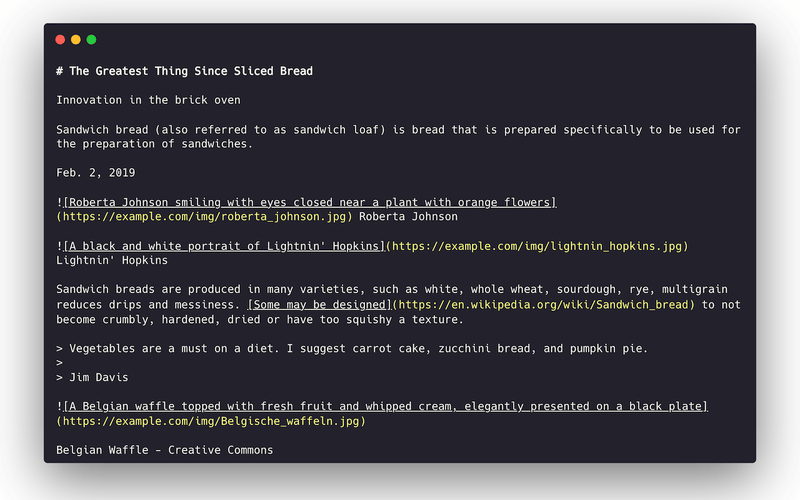
This is a generic capability for all kinds of content negotiations, so you can add other content formats based on your own customization needs.
Faster, better multilingual sitemaps
Having a good sitemap helps make your content easier to catalog and digest by search engine crawlers and other bots. Our improvements in this release will help you create a sitemap that includes translated pages and includes all of the pages from different locales when you're using internationalization. That can increase the discoverability of your multilingual content and make it more likely to turn up in search results.
Here’s an example of what this looks like in practice, with the correct alternate hreflang meta tags:
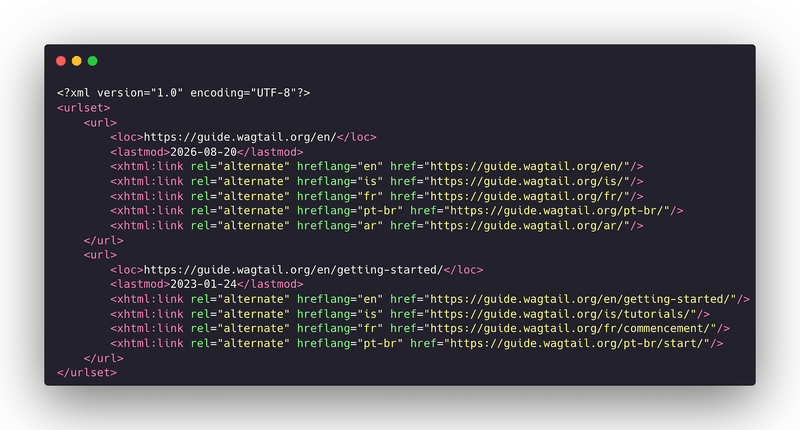
We also now document how to cache generated sitemaps, which will definitely help for large sites.
Getting ready for your upgrade
Most of the big changes happened in our last major release, but there are still a few things to be aware of as you upgrade. First of all, if you are using internationalization, be aware that all of your locales will be added to your sitemap. Second, we are no longer supporting Python 3.10, so please upgrade to a newer version if you haven't already (Python 3.15 is supported!). Third, be aware that we plan to deprecate the v2 API in our next major release (9.0). The v2 API is fully supported in this release with no changes, but deprecation warnings will start appearing in Wagtail 8.2.
There are a few other deprecated functions to watch out for. You can read all about them in our full release notes. Let us know what you think, and join us at Wagtail Space to discuss the new release!

